
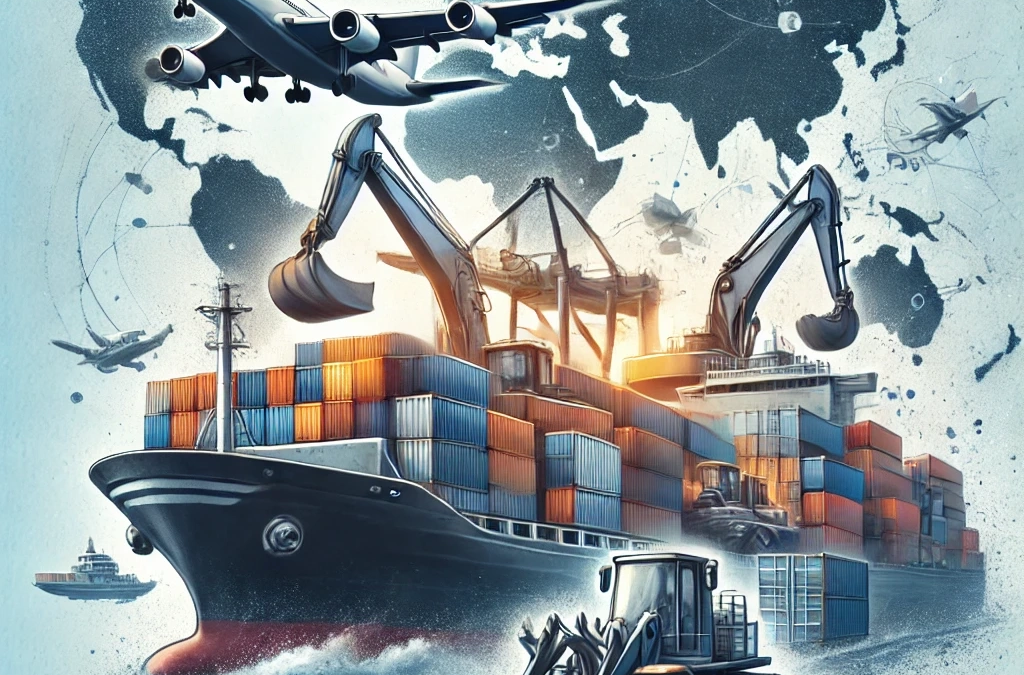
Exporting used (as opposed to new) construction machinery offers specific advantages, which differ slightly from those associated with new machinery. Here is a detailed analysis of the benefits associated with this practice in the sector:
1. Competitive cost for emerging markets
✅ Financial accessibility
Second-hand machines are often much less expensive than new ones, making them more affordable for developing countries or those with limited budgets.
✅ A high-cost alternative
This solution enables fast-growing countries, particularly in Africa, Asia and Latin America, to acquire high-quality equipment without blowing their budgets, thus promoting infrastructure development.
2. Durability and reliability of used machines
💪 Machines built to last
Public works equipment is built to withstand harsh conditions and can operate efficiently, even after thousands of hours of use.
🔧 Ease of maintenance
Recognized brands offer a wide network of spare parts and technical expertise, guaranteeing efficient maintenance and increased longevity of exported machines.
3. Reducing environmental impact
♻️ Recycling and reuse
Exporting used machinery helps to extend its service life and limit the production of new equipment, thus reducing industrial waste.
🌱 A sustainable approach
Giving machines a second life helps minimize the ecological footprint of the construction sector.
4. Quick access and flexibility
⏳ Reduced acquisition time
Unlike new machines, which can take several months to manufacture, used machines are immediately available, ideal for projects requiring rapid set-up.
📌 Wide choice and availability
The used machinery market offers a diversity of models and brands, enabling buyers to find equipment tailored to their specific needs.
5. Niche markets and resale opportunities
🚜 Models tailored to specific needs
Some used equipment has features that are no longer available in recent models, creating a demand for machines with unique features.
💼 Business opportunities for resellers
Buying in bulk and reselling in different countries enables distributors to take advantage of market fluctuations and differences in demand.
6. Financial benefits for exporting companies
💰 Increased profitability
Exporting used machines enables vendors to free up space for new equipment while recouping part of their initial investment.
🏭 Less pressure on production
Unlike new machines, these exports do not require complex manufacturing infrastructure, reducing costs and logistics management.
7. Adaptability to local needs
🌍 Machines adapted to local conditions
Second-hand equipment that has already been used in similar environments is often better adapted to working conditions in importing countries.
📖 Models already mastered
As local operators are often familiar with these machines, training and integration into projects are facilitated.
8. After-sales support and service
🔧 International service networks
Leading brands of construction machinery generally have a global technical support network, guaranteeing buyers easy access to spare parts and maintenance.
🎓 Operator training
Some export companies offer training to optimize the use of equipment and extend its service life.
Conclusion
There are many advantages to exporting used construction machinery:
✅ Reduced cost for buyers
✅ Reduced environmental impact
✅ Dynamic market offering resale opportunities
✅ Fast, flexible acquisition
It supports infrastructure development in growing countries, while representing an economic and ecological opportunity for exporters. However, a thorough understanding of local regulations and market needs is essential to the success of this activity.

